Surface-only protection
Many sealers sit on top of the concrete instead of penetrating. They look great on day one and fail in months.
Long-term field testing, Amazon review pattern analysis, and real outdoor comparisons of the most popular concrete sealers sold in the United States.
 Single coat sealedUnsealed control↘ Double coat sealed
Scored across ten categories — durability, breathability, water resistance, real-world performance, ease, review consistency, freeze/thaw, algae, appearance, and value.
Penetrating silane/siloxane hybrid with nano-additives
Penetrates deep, breathes, and holds up after 34 months of outdoor exposure.
Why it ranked: Independently field-tested through 34 months of full outdoor exposure with consistent water repellency, no peeling, and minimal algae return.
Read full review →Water-based penetrating silane sealer
Strong reviewer record for chimneys and vertical masonry — but coverage and transparency problems on horizontal concrete.
Why it ranked: Corrected from preliminary 8.6/10. Real ~$70/gallon cost with stated 250 sq ft coverage actually delivering 100–125 sq ft, undisclosed active ingredient percentage, undisclosed cold-climate ice hazard, and a '100-year warranty' that covers only properties guaranteed by the chemistry.
Read full review →Silane/siloxane water-based penetrating sealer
Reliable DOT-grade penetrating sealer with strong freeze/thaw resistance.
Why it ranked: A consistent, well-documented silane/siloxane that performs predictably on driveways and exterior flatwork.
Read full review →Water-based penetrating silane/siloxane
Most accessible budget penetrating sealer — easy to apply, with documented limitations.
Why it ranked: Corrected from preliminary 8.6/10. Realistic 1–2 year service life, undisclosed cold-climate ice hazard, severe batch quality inconsistency, and the lowest active-ingredient concentration (5–8%) in this ranking.
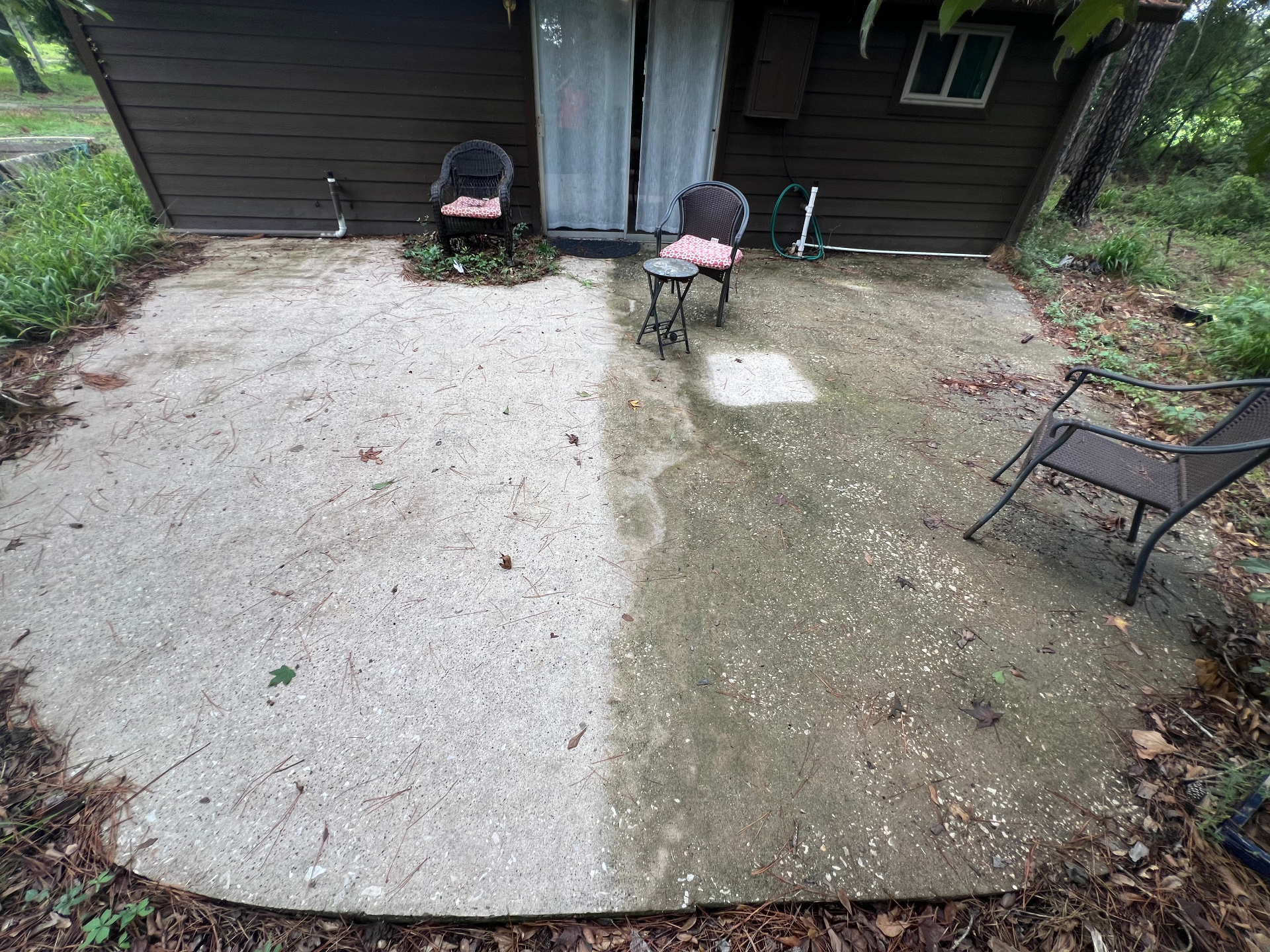
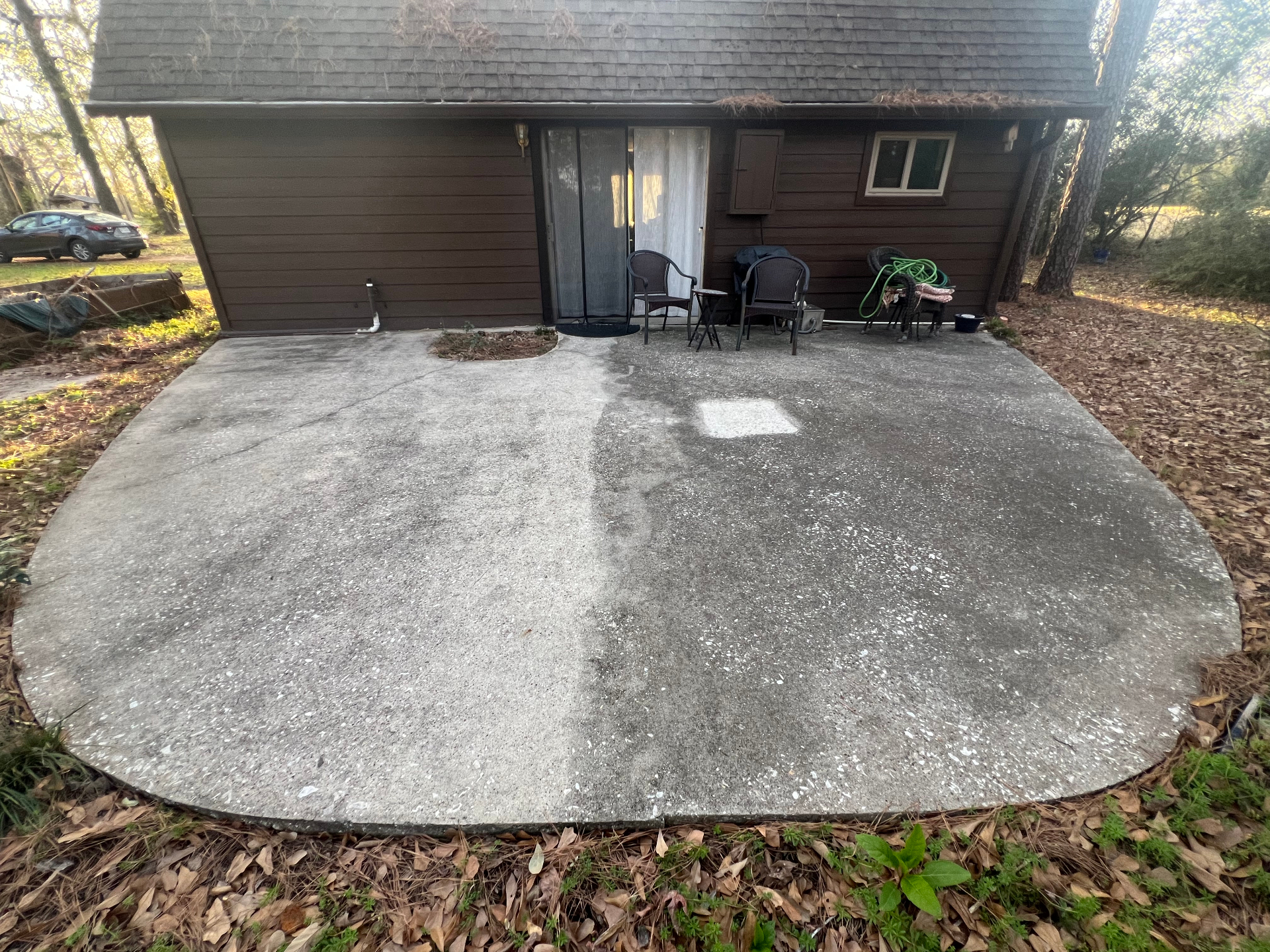
Read full review →Same patio. Same climate. Two halves: one sealed, one untreated. Documented across nearly three years of full outdoor exposure.
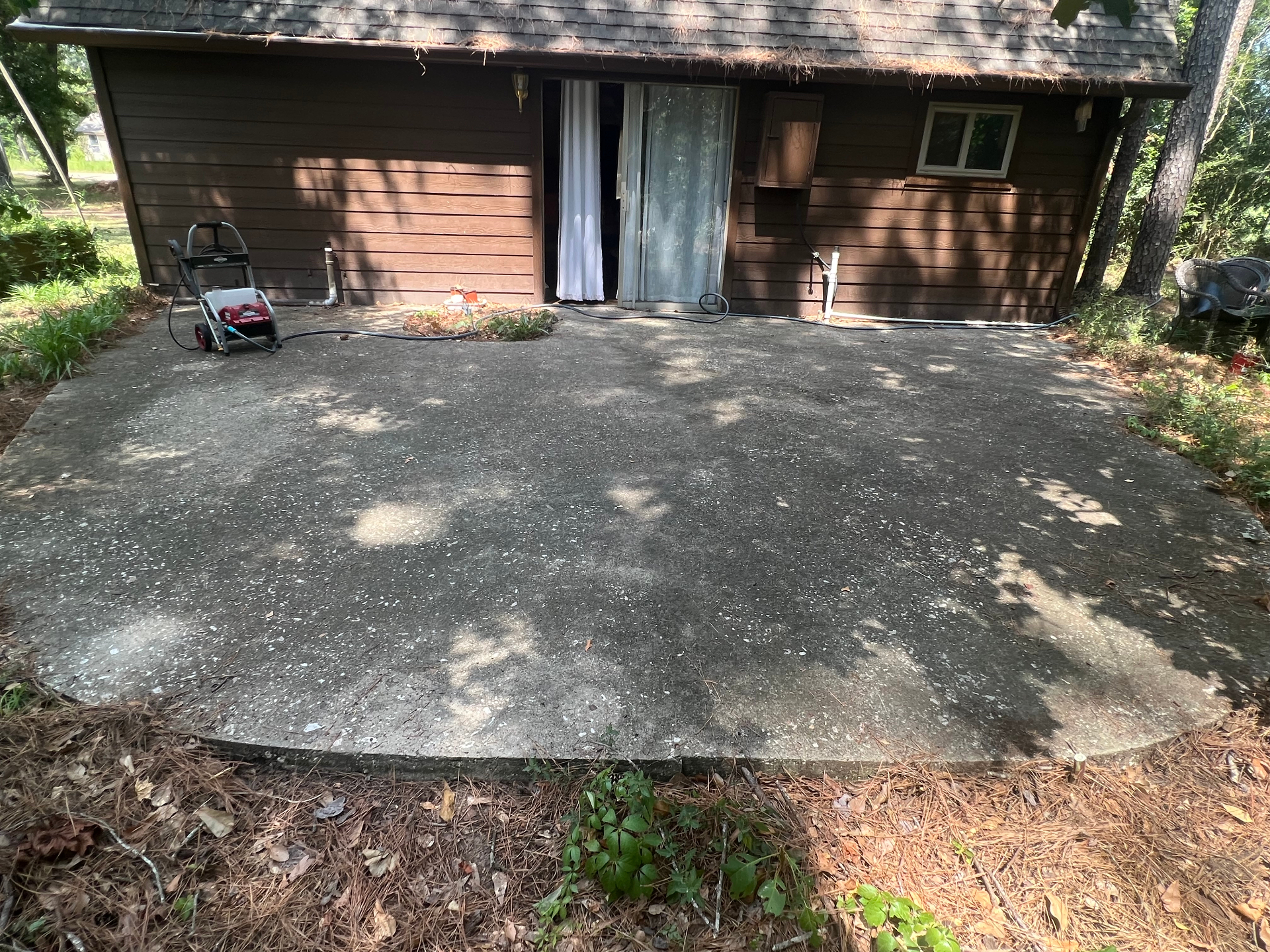
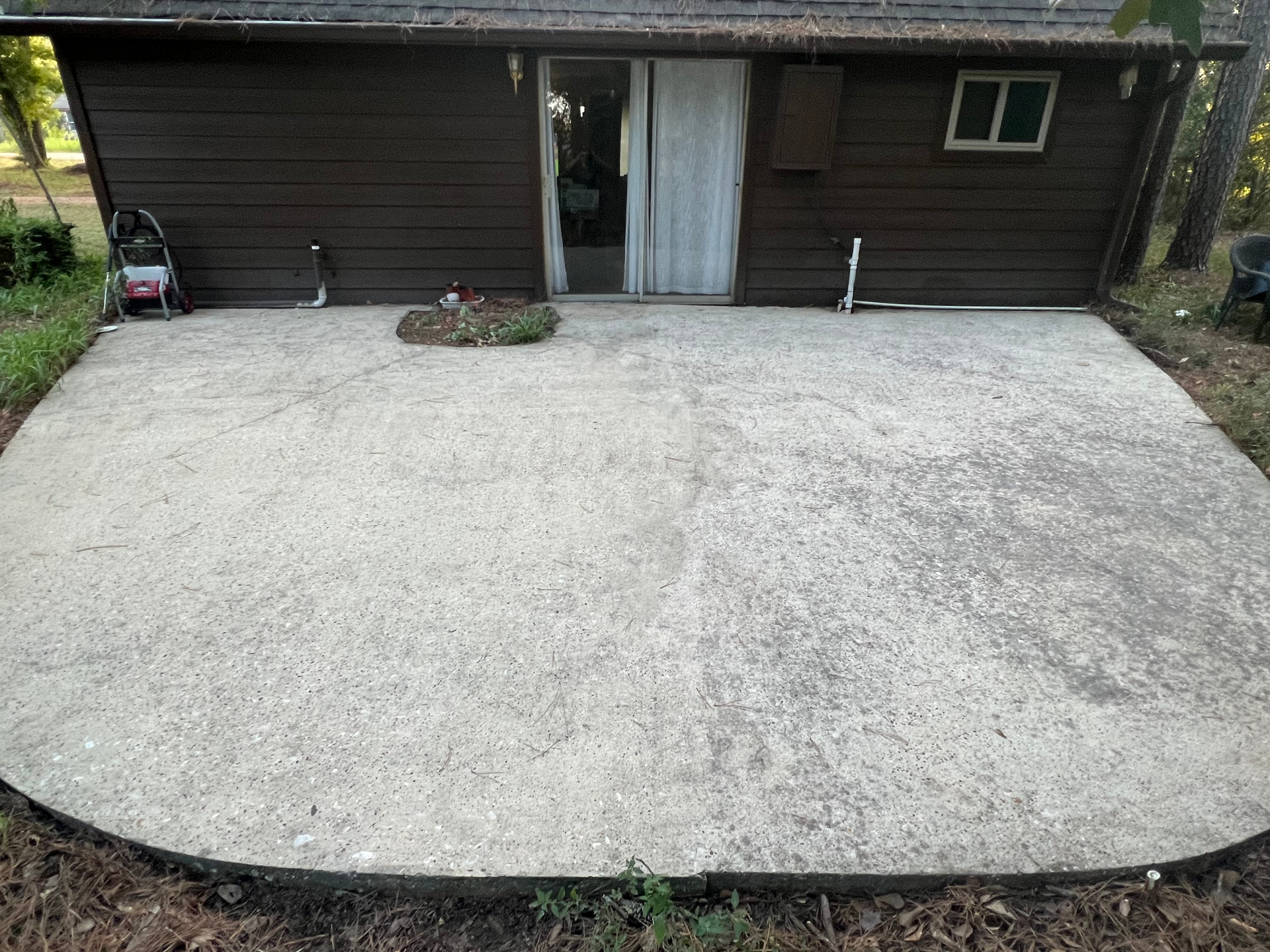
Test setup: a single concrete patio split into two halves on 25 July 2023. Left half sealed with a single coat of Nanoprotect Concrete Sealer; right half left untreated as the control, with one square inside it sealed with a double coat as a long-term reference patch. Identical climate, sun, rain, freeze/thaw, and traffic for both sides.
Baseline condition: dirty, weathered concrete pavers with no prior sealing. Pressure washer staged for the prep work that comes next.
Same day, after pressure washing and drying. Left half sealed with a single coat of Nanoprotect concrete sealer. Right half left as the unsealed control. A specific square inside the right half received a double coat — the long-term reference patch.
After a full late-summer and early-autumn cycle of sun, rain, and foot traffic. Sealed side still appears virtually identical to day 0; unsealed control side already shows the first signs of moisture darkening.
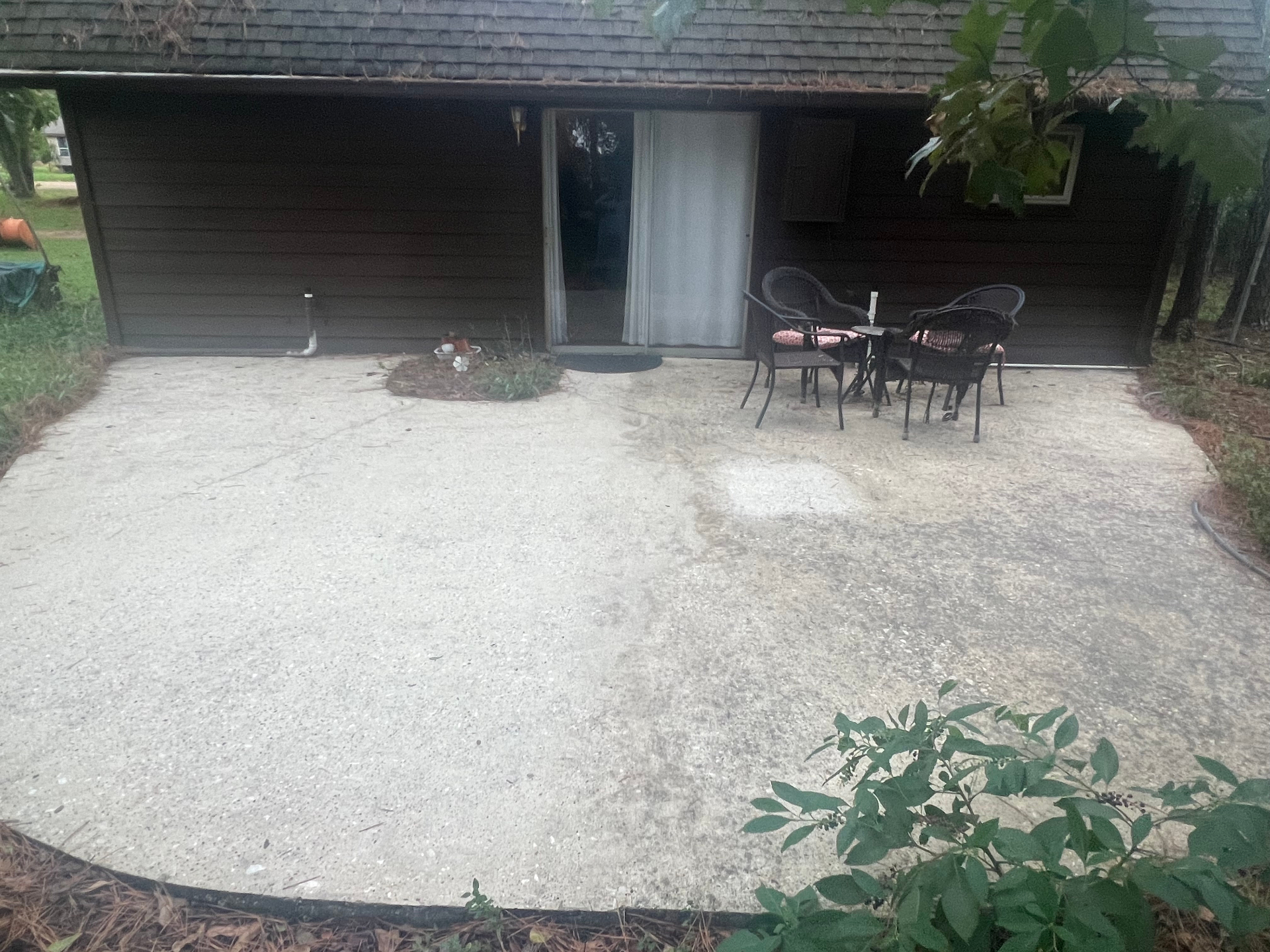
After twelve months of full outdoor exposure including a complete winter. Sealed left half has stayed bright and clean. Unsealed right half is visibly green-stained with biological growth — the protection differential is now obvious to the naked eye.
Almost two years on. Sealed half continues to repel water and resist staining; unsealed half has darkened further and accumulated more biological soiling. No peeling, whitening, or visible surface change on the sealed side.
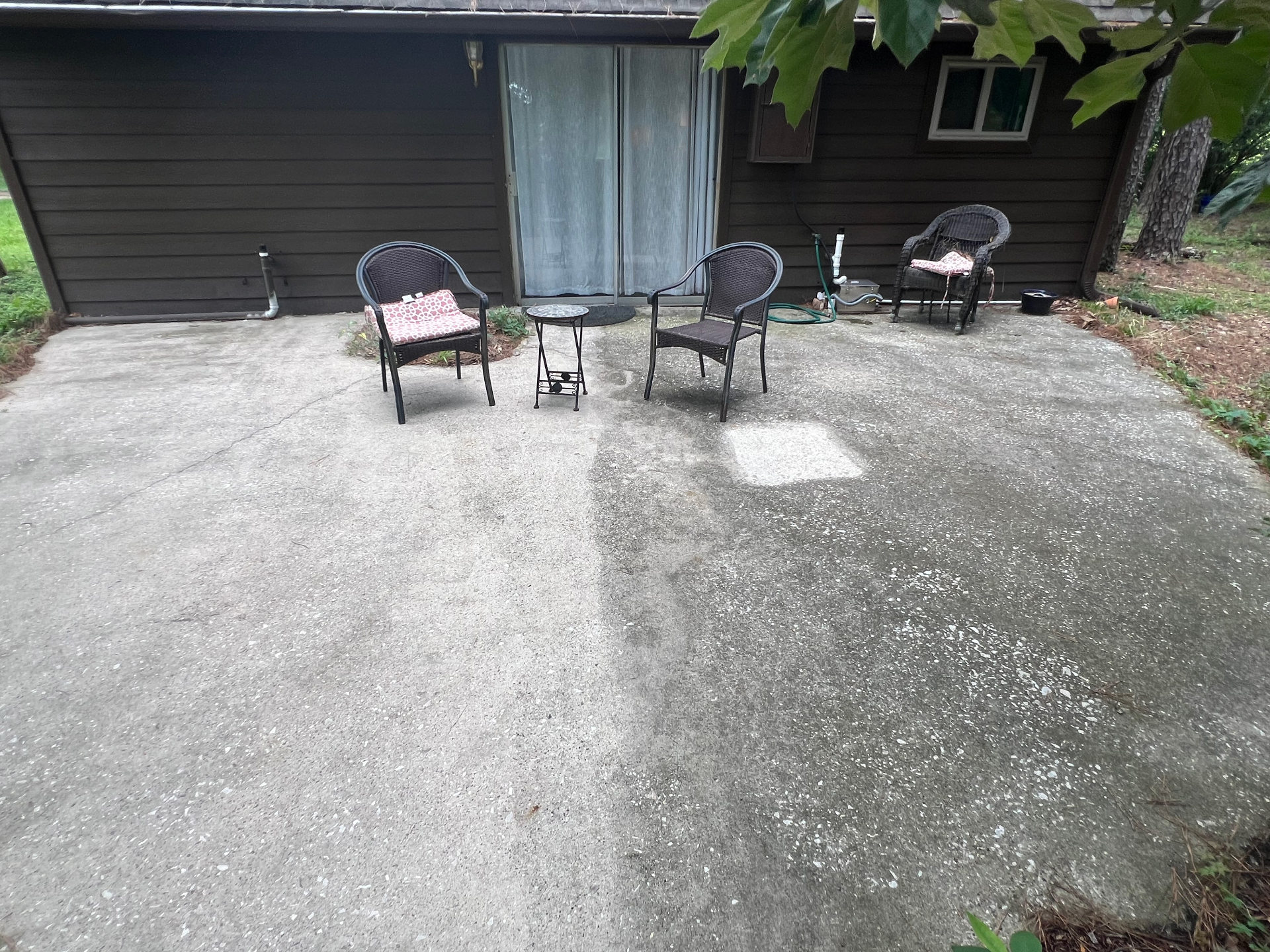
Documented mid-winter after multiple freeze/thaw cycles. Sealed left half remains distinctly cleaner and lighter; unsealed control darker with retained moisture and bio-growth. No micro-spalling on the sealed side.
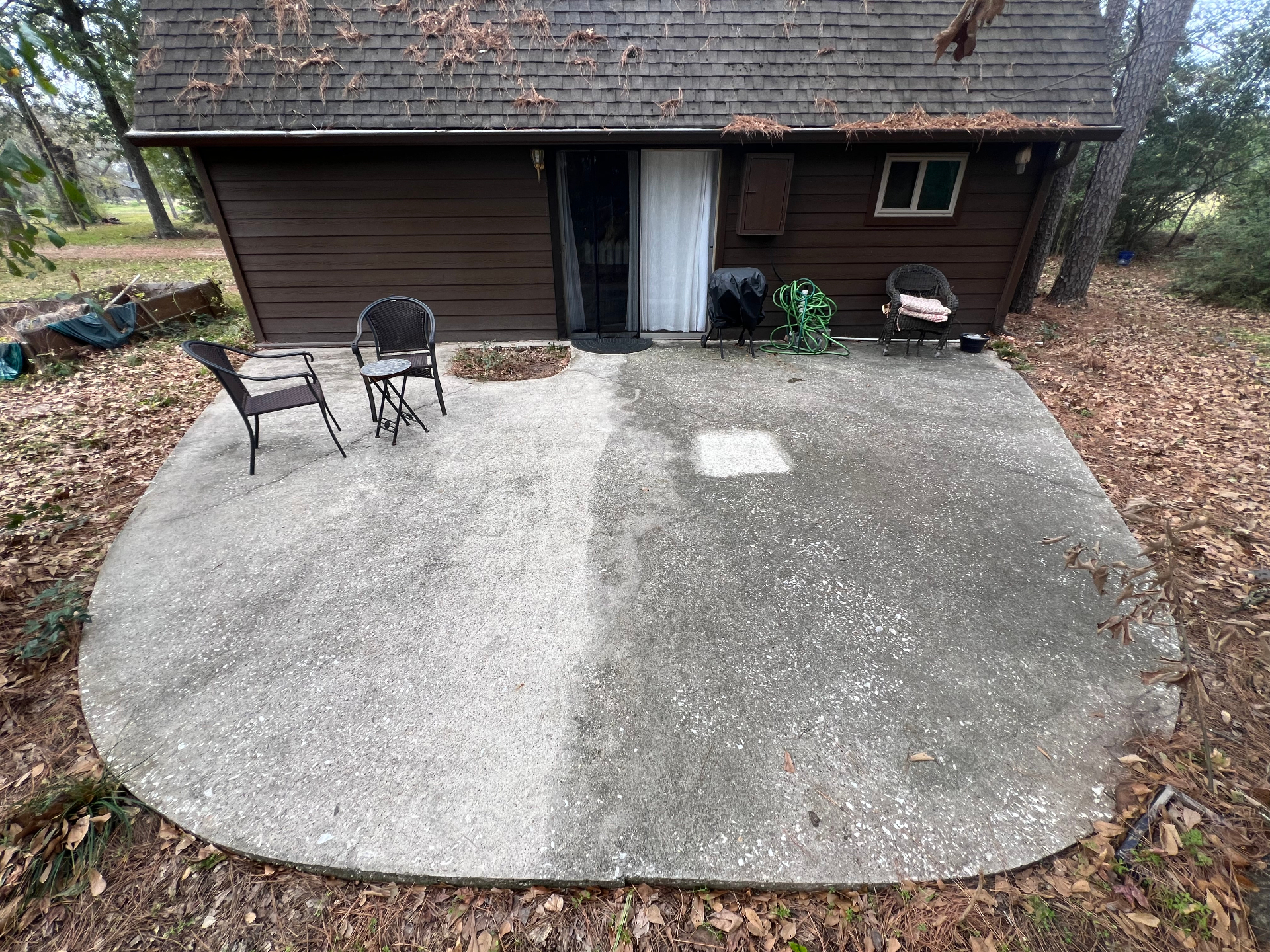
Thirty months in. Visual contrast between sealed and unsealed halves remains clear. The sealed half has aged but has not failed — no peeling, no whitening, no algae bloom on the protected surface.
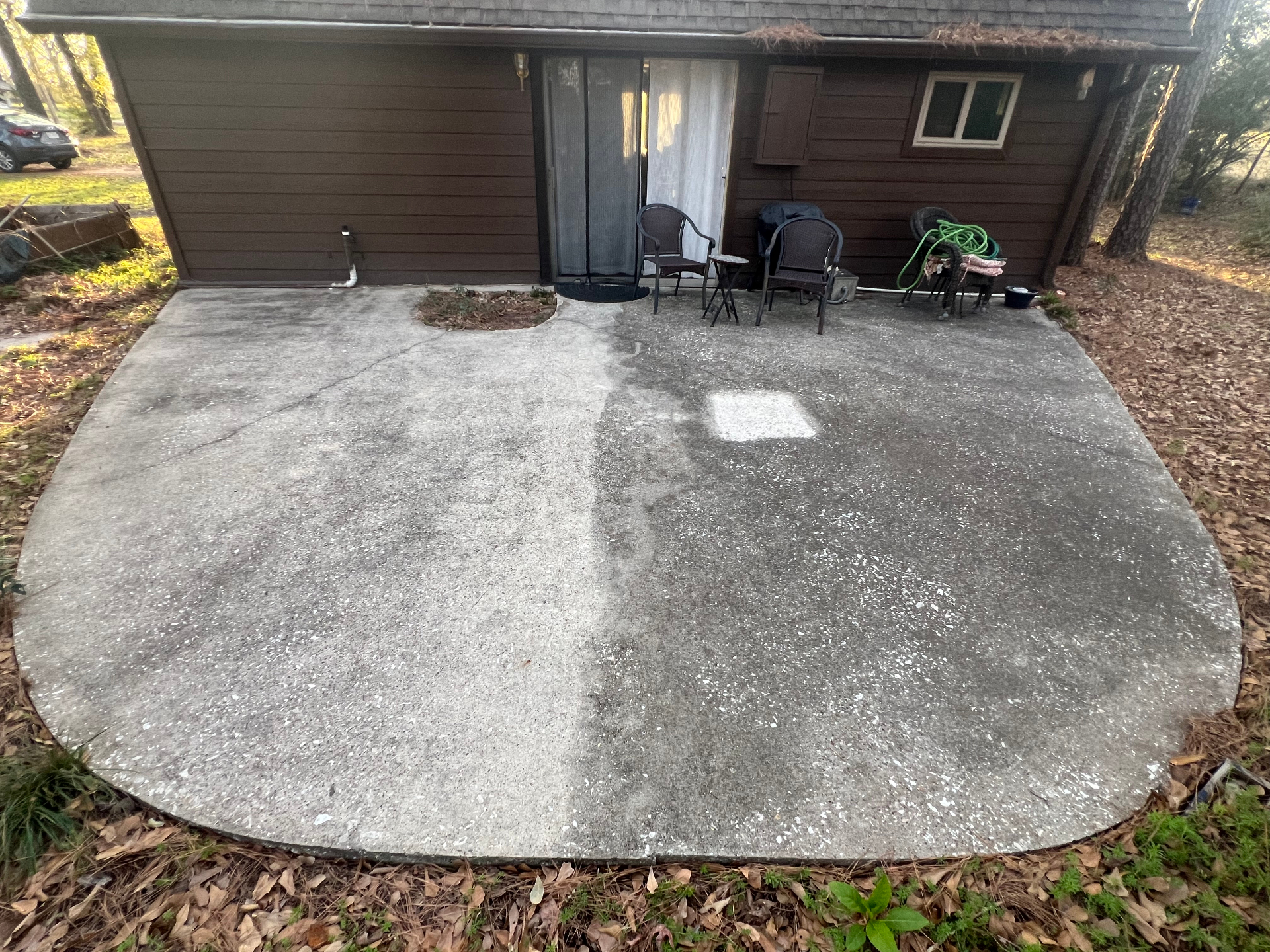
Following the third complete winter. Sealed-side contrast still clearly visible. The protective performance has held through three full freeze/thaw seasons without recoating.
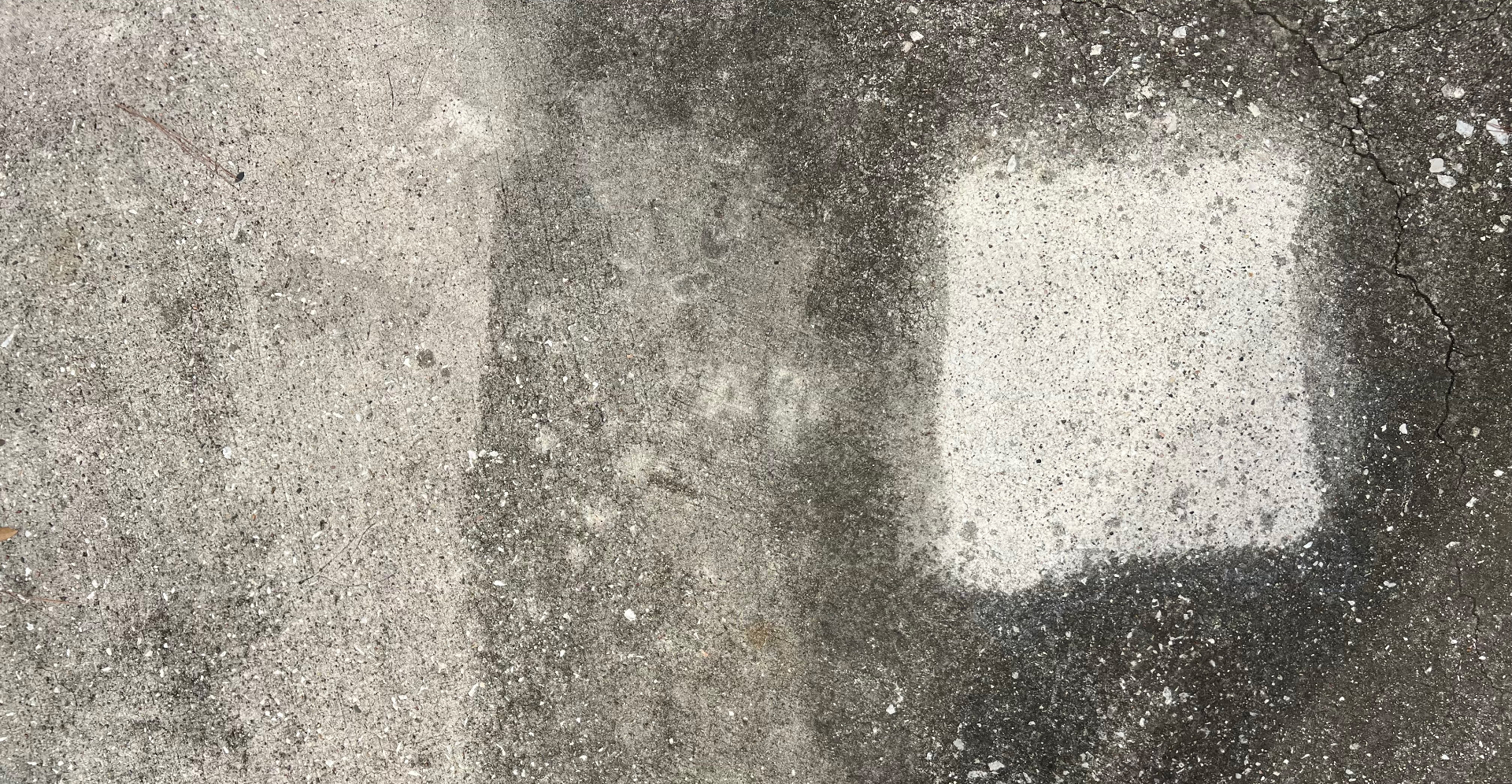
Macro shot of the test surface after 33 months. The bright square on the right is the original double-coated test patch — still holding its near-original concrete tone while the surrounding unsealed and single-coated areas have weathered and darkened. This is the clearest visual proof that double-coating dramatically extends real-world performance.
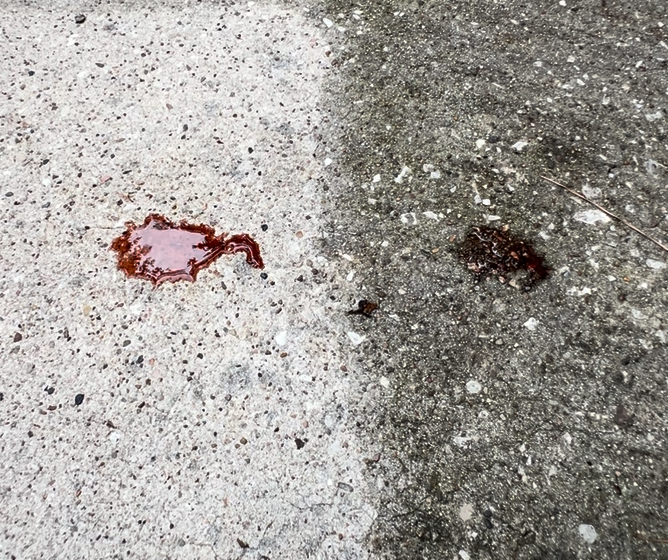
Same red wine, same volume, same dwell time. On the sealed side (left) the wine sits as a clean puddle on the surface and wipes off without staining. On the unsealed side (right), the wine has soaked into the pores and stained the concrete. Direct, repeatable evidence of pore-level protection.
Most failures aren't random. They follow six recurring patterns that show up across products, climates, and substrate types.
Many sealers sit on top of the concrete instead of penetrating. They look great on day one and fail in months.
Acrylic 'wet look' sealers can whiten, blush, or peel under freeze/thaw and trapped moisture.
Beading is a marketing visual, not a durability metric. It often fades long before real protection does — or vice versa.
Concrete needs to release vapor. Non-breathable films trap moisture and accelerate spalling.
If a sealer doesn't keep moisture out of the pores, algae returns within a single damp season.
Water entering the pores expands when frozen. Without true penetrating protection, micro-cracks compound every winter.
Independent reviews of the most-purchased concrete sealers on Amazon and the broader US market.
Penetrates deep, breathes, and holds up after 34 months of outdoor exposure.
GhostshieldStrong reviewer record for chimneys and vertical masonry — but coverage and transparency problems on horizontal concrete.
Foundation ArmorReliable DOT-grade penetrating sealer with strong freeze/thaw resistance.
EagleMost accessible budget penetrating sealer — easy to apply, with documented limitations.
RadonSealDifferent chemistry from every other product here — silicate densifier for basement moisture and concrete dust, not outdoor water beading.
Rain Guard Water SealersCheapest penetrating sealer in the ranking by concentrate format — but the highest 1★ rate and a 7-year unresolved batch coagulation problem.
Long-form, technically grounded articles for homeowners and trade professionals.
Two completely different chemistries with different long-term behavior. Here's how to choose.
Read article →Six recurring failure modes we've documented across 34 months of outdoor exposure.
Read article →What really survives a Northern winter — and what doesn't.
Read article →Beading can mislead. Here's what to actually measure for long-term protection.
Read article →Realistic lifespans by chemistry, climate, and surface type.
Read article →A practical, step-by-step field-tested process for DIY application.
Read article →
Athanasios Vamparis is a long-time surface protection specialist, coatings developer, and outdoor field tester with years of experience in nano coatings, concrete sealers, SiO₂ and PTFE coatings, and ceramic sprays across European and North American markets.
His work focuses on long-term outdoor performance — what really lasts on a real patio, in a real climate, after years of sun, rain, freeze, and thaw.
Read the full story →In our 34-month outdoor field test across freeze/thaw and humid conditions, penetrating silane/siloxane chemistries — led by Nanoprotect — outperformed acrylic film-formers on durability, breathability, and algae resistance.
Quality penetrating sealers typically last 5–10+ years on properly prepared concrete. Acrylic film coatings usually need recoating every 1–3 years depending on UV and traffic.
True penetrating sealers leave a near-natural matte appearance. Color-enhancing siloxane variants slightly deepen tone without forming a film.
Yes, indirectly. By keeping water and nutrients out of the surface pores, breathable penetrating sealers significantly slow biological growth.
Yes — testing methodology and rankings are editorially independent. See our methodology and disclosure pages for full transparency.