Nanoprotect Concrete Sealer Review (2026): 34-Month Field Test + Global Review Intelligence
The only concrete sealer review backed by 34 months of continuously documented, photographed outdoor field testing — plus structured analysis of 3,068 global Amazon ratings.
Quick summary
- Evidence track
- 34-Month Outdoor Field Test (primary) + Amazon Global Review Intelligence (secondary)
- Field test status
- Ongoing — started 25 July 2023, still active
- Amazon dataset
- 576 detailed reviews, 3,068 total global ratings
- Overall score
- 9.3 / 10
- Ranking
- #1 in 2026 Best Concrete Sealers
- · The only product in this ranking backed by a continuously documented, photographed, 34-month outdoor field test on a real split-surface patio — through three full winters, freeze/thaw cycles, biological seasons, and a controlled unsealed comparison.
- · Amazon's Choice. 3,068 global ratings, 4.5/5 average. 69% five-star, 19% four-star — one of the strongest positive distributions in the concrete sealer category.
- · Every 1★, 2★, and 3★ review in the dataset comes from Germany. Both US 1★ reviews document application on non-eligible surfaces. Zero documented failures on intended outdoor concrete applications from US buyers.
- · The dominant critical theme across German reviews is coverage rate — buyers consistently report 16–27m² per 5L against a stated 40–60m² on highly porous paving stones. This is a genuine and recurring issue addressed honestly in this review.
- · The 34-month field test was conducted on poured concrete pavers in a moderate European climate — the substrate and climate closest to the US buyer profile.
Why it ranks #1
Nanoprotect ranks first not because of marketing claims, but because it is the only product in this ranking for which we have continuously documented real-world outdoor performance — from day 0 through 34 months — on the same patio, in the same climate, against an unsealed control surface. Every other product in this ranking is scored from consumer review analysis. Nanoprotect is scored from evidence we generated ourselves, under controlled conditions, with photographs at every interval.
That distinction matters. The concrete sealer industry is built on unverified durability claims. Every product claims 7–10 years. Almost none of them have published a single photograph of the same surface at the 12-month, 24-month, and 34-month mark alongside an unsealed control. We have that evidence for Nanoprotect. We do not have it for any other product in this ranking.
The 34-month split-patio test
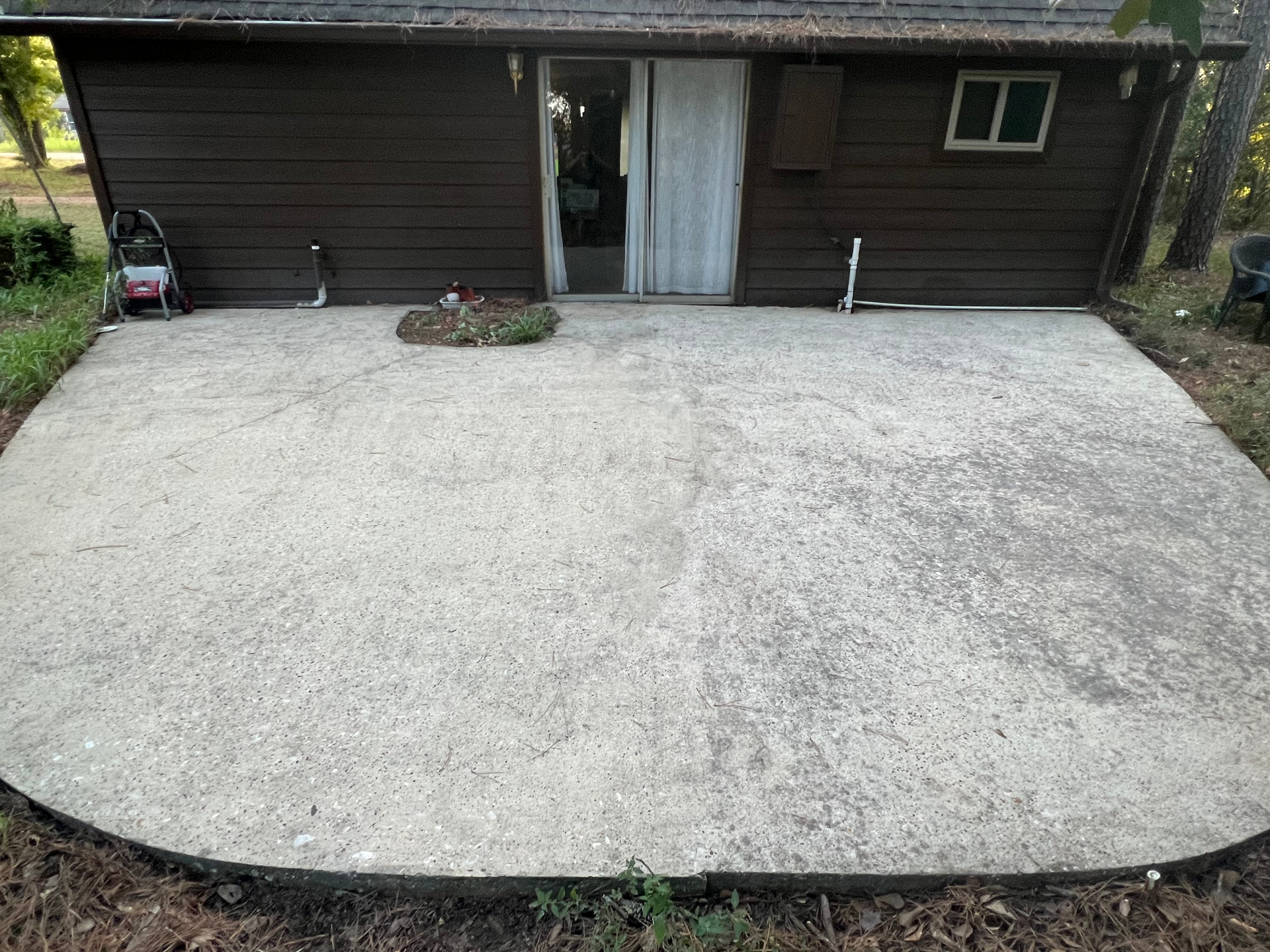
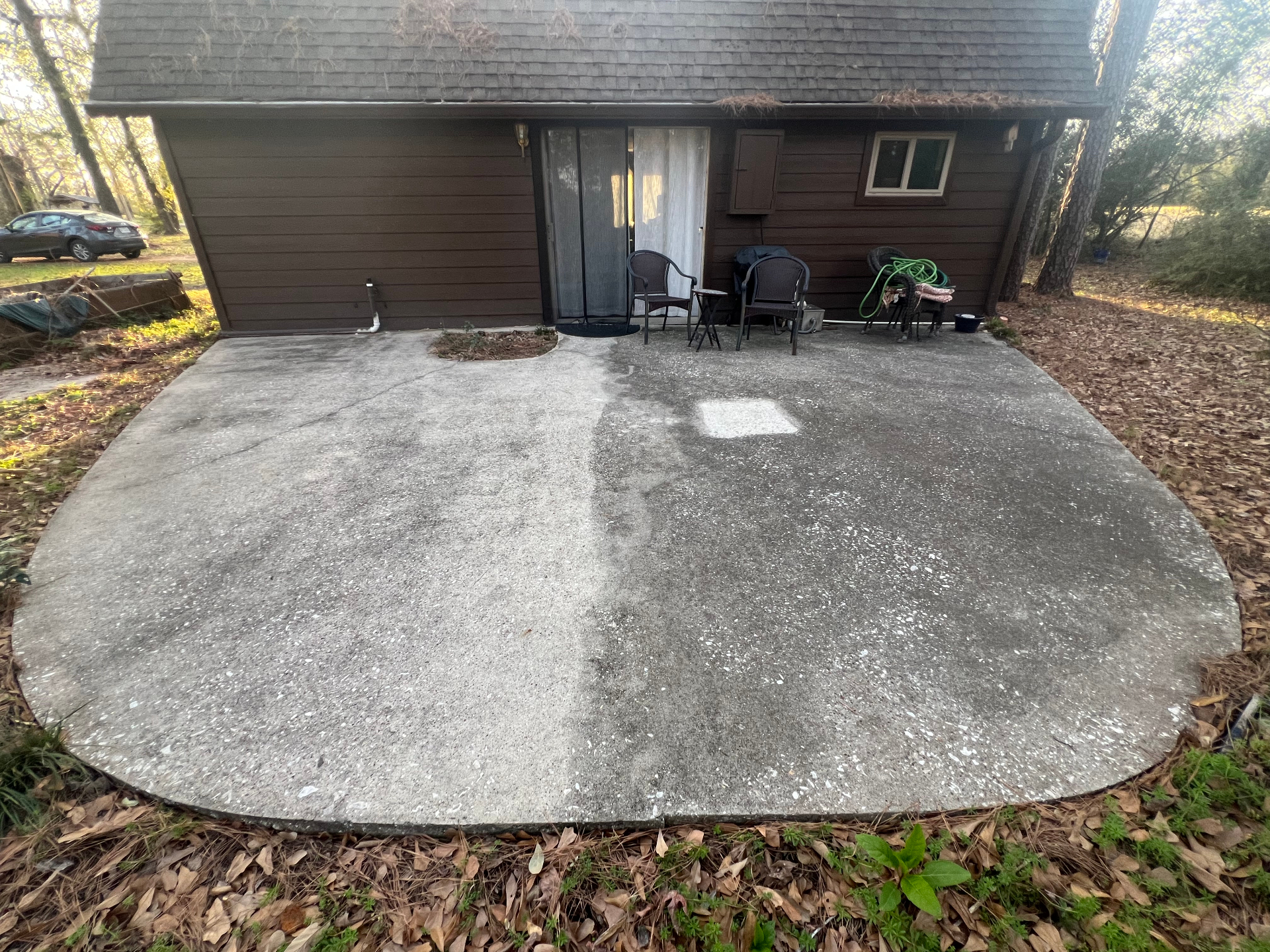
On 25 July 2023 a single concrete patio was pressure-washed, dried, and split into two halves. The left half was sealed with a single coat of Nanoprotect Concrete Sealer. The right half was left untreated as the unsealed control. Inside the control half, one square was sealed with a double coat as a long-term reference patch. Both halves have been exposed to identical sun, rain, freeze/thaw cycles, and foot traffic for every day since. The test is still active.
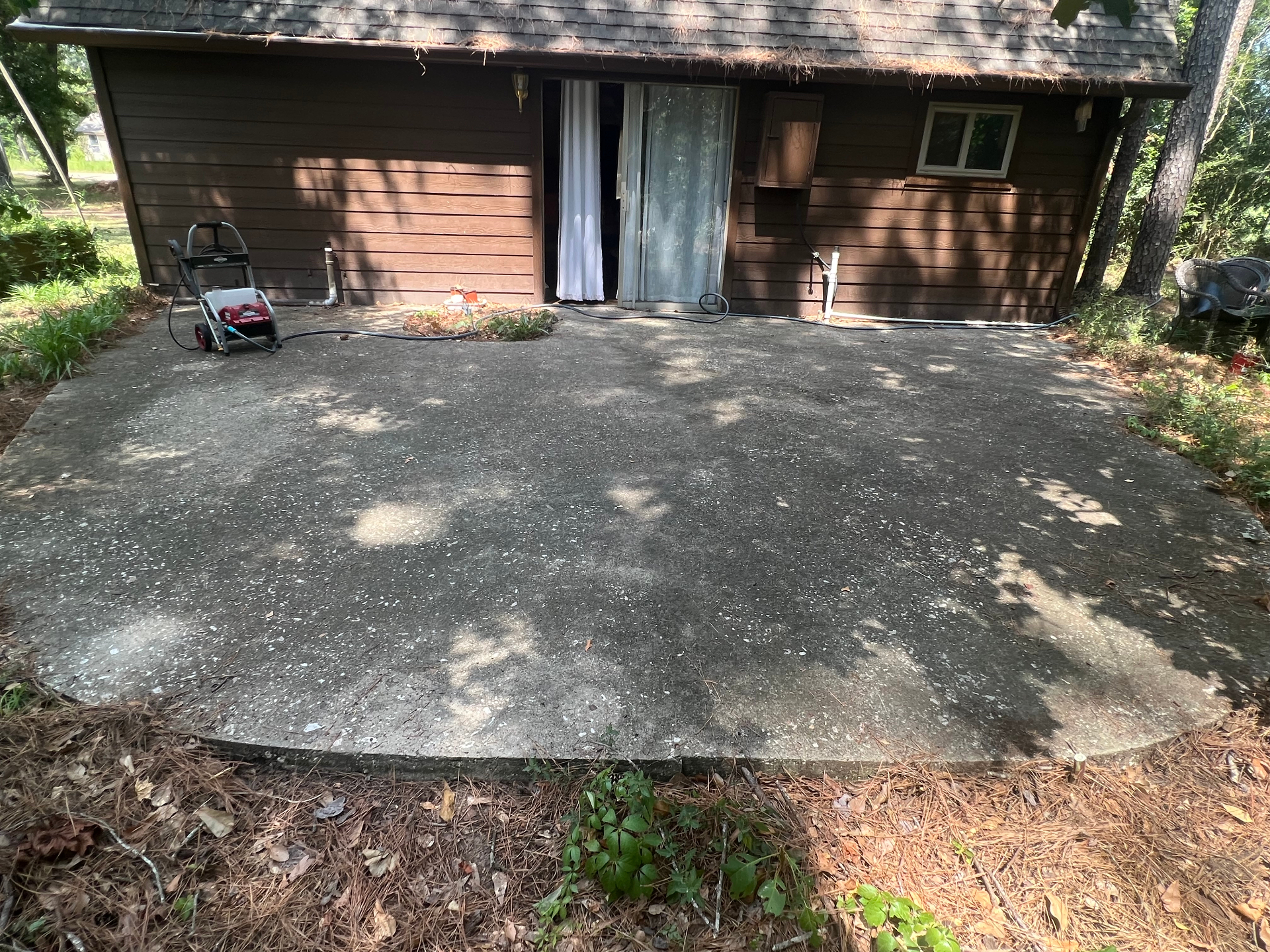
- 25 Jul 2023Day 0 · before
Untreated patio, before cleaning
Baseline condition: weathered, untreated concrete pavers. Pressure washer staged for prep.
- 25 Jul 2023Day 0 · after
Cleaned and sealed — split test installed
Left half sealed with a single coat of Nanoprotect; right half left untreated as control, with one square inside it sealed with a double coat as a long-term reference patch.
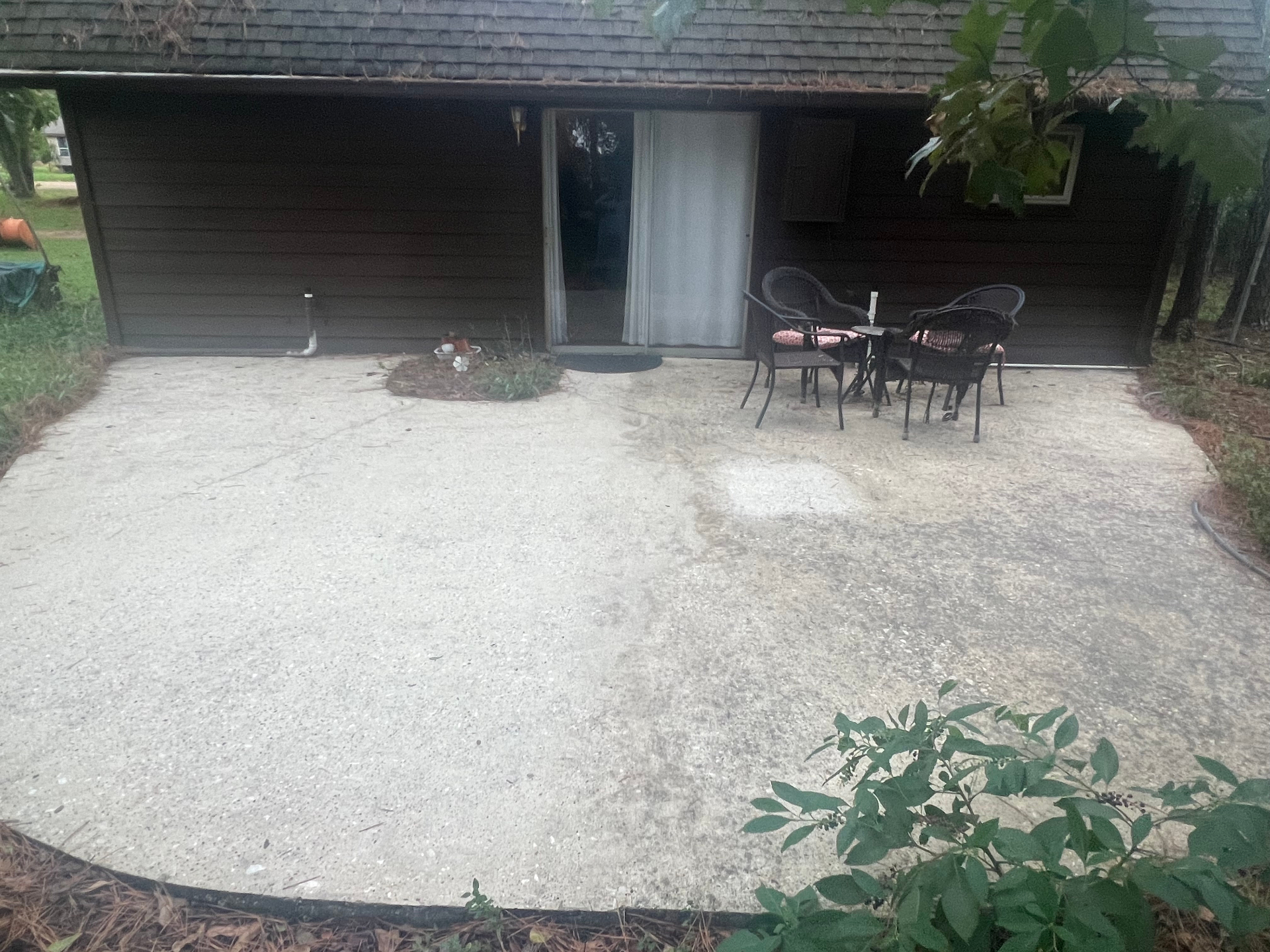
- 31 Oct 2023+3 months
First seasonal exposure
Sealed side appears unchanged from day 0; unsealed control already shows early moisture darkening.
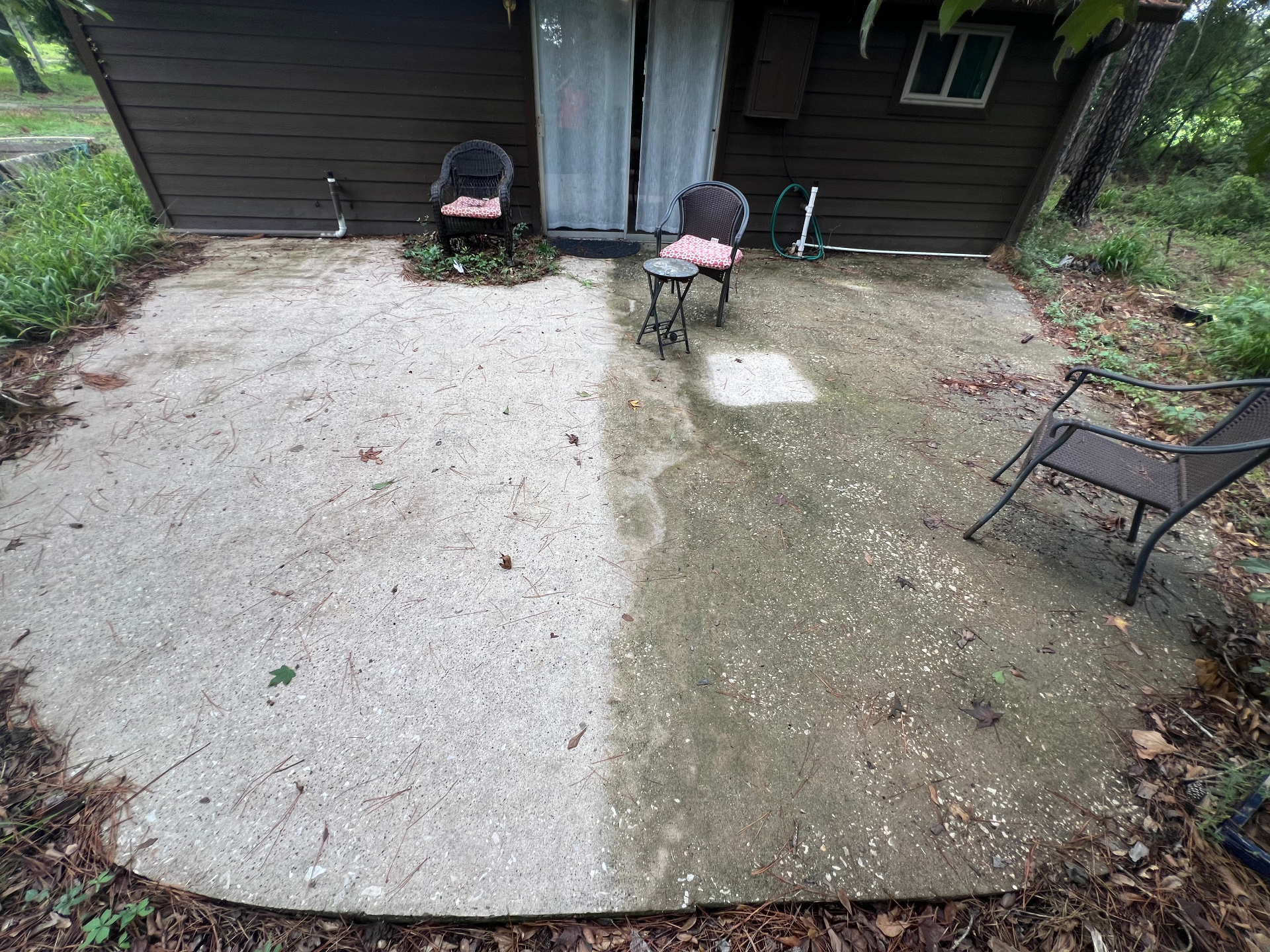
- 27 Jul 2024+12 months
One full year — first dramatic contrast
Sealed half stays bright and clean. Unsealed half is visibly green-stained with biological growth.
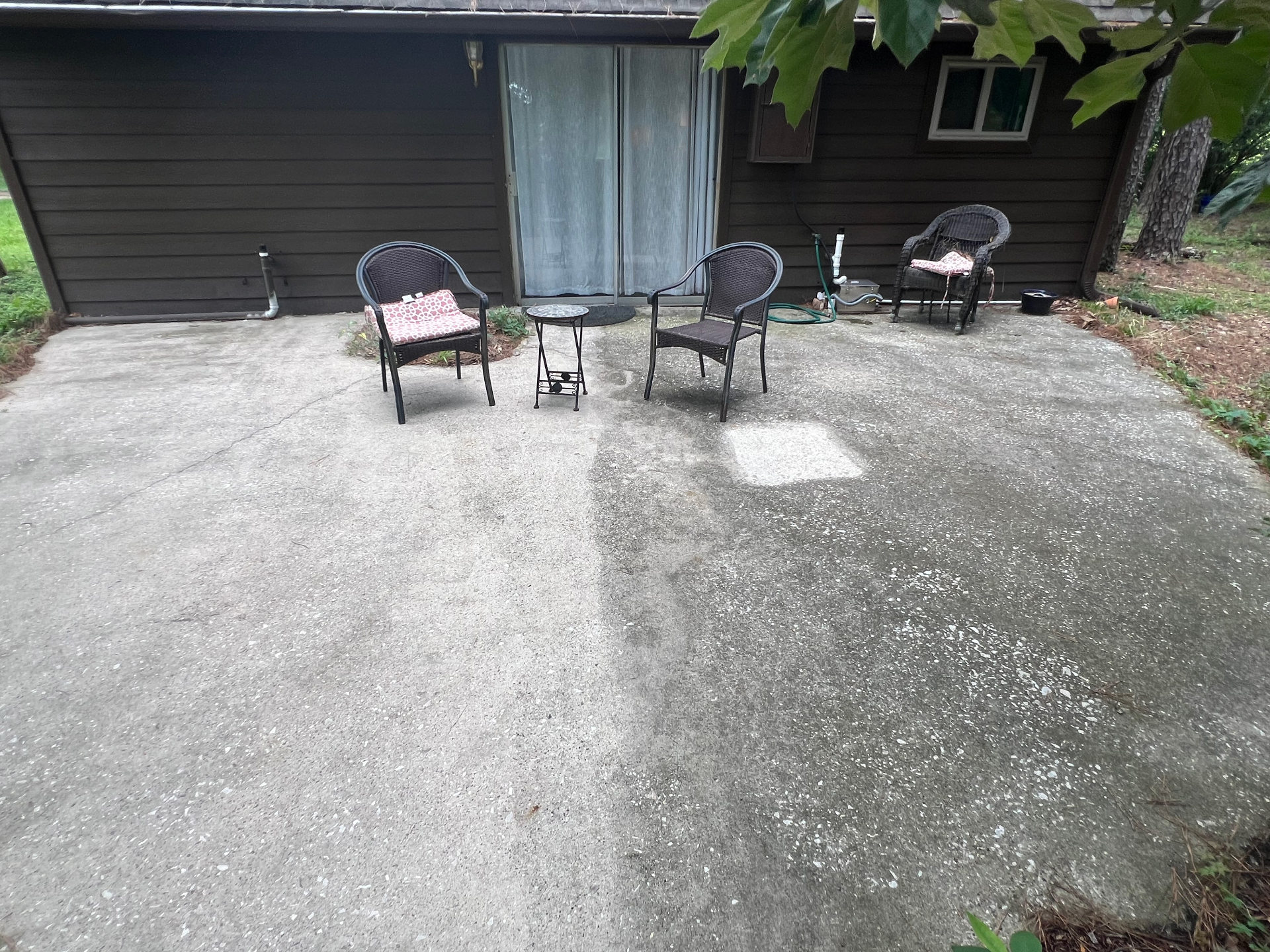
- 5 Jun 2025+23 months
Almost two years — sealed side holds
Sealed half continues to repel water and resist staining. No peeling, whitening, or visible surface change.
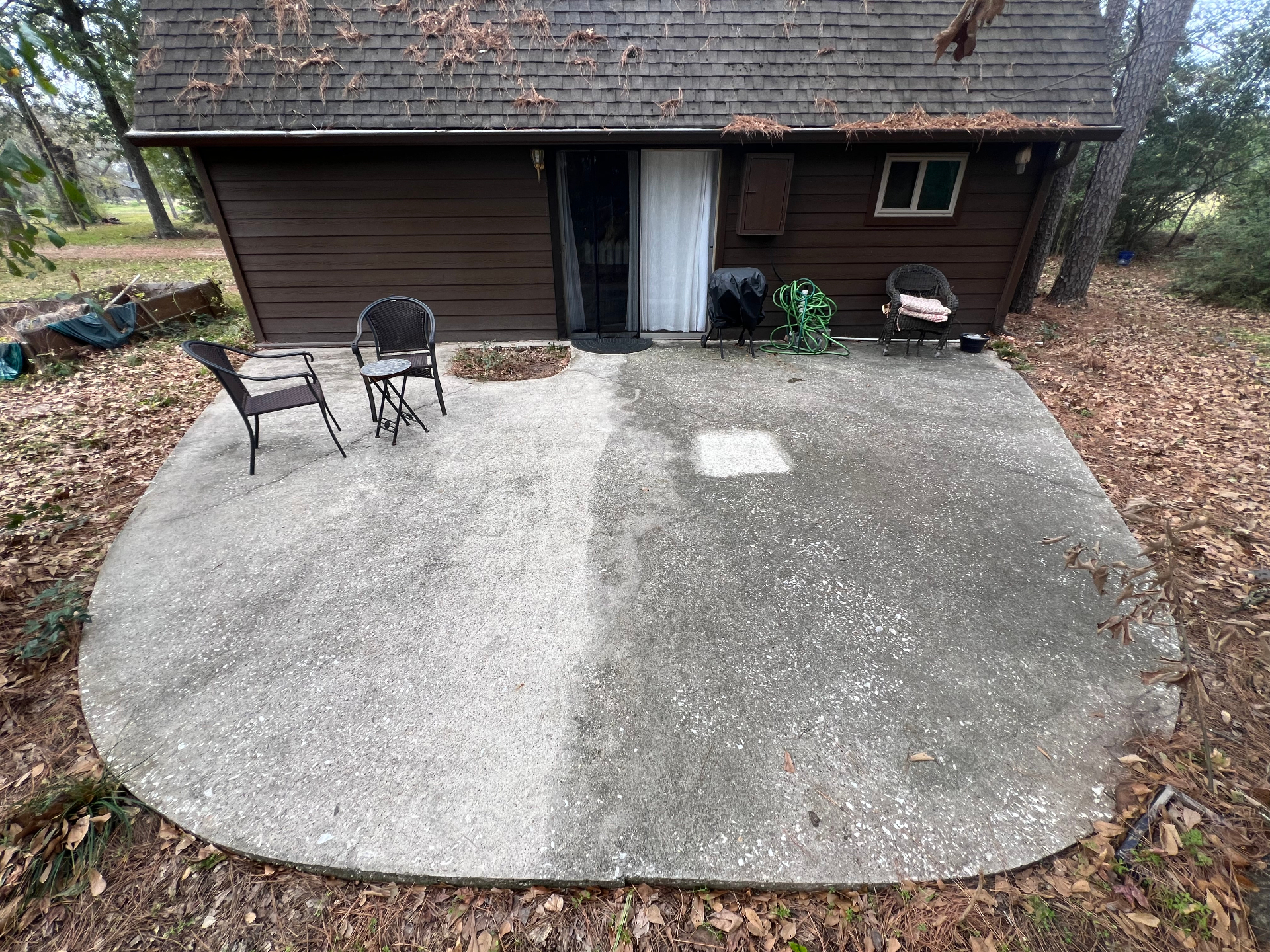
- 6 Jan 2026+29 months
Mid-winter, multiple freeze/thaw cycles
Sealed left half remains distinctly cleaner; unsealed control darker with retained moisture and bio-growth.
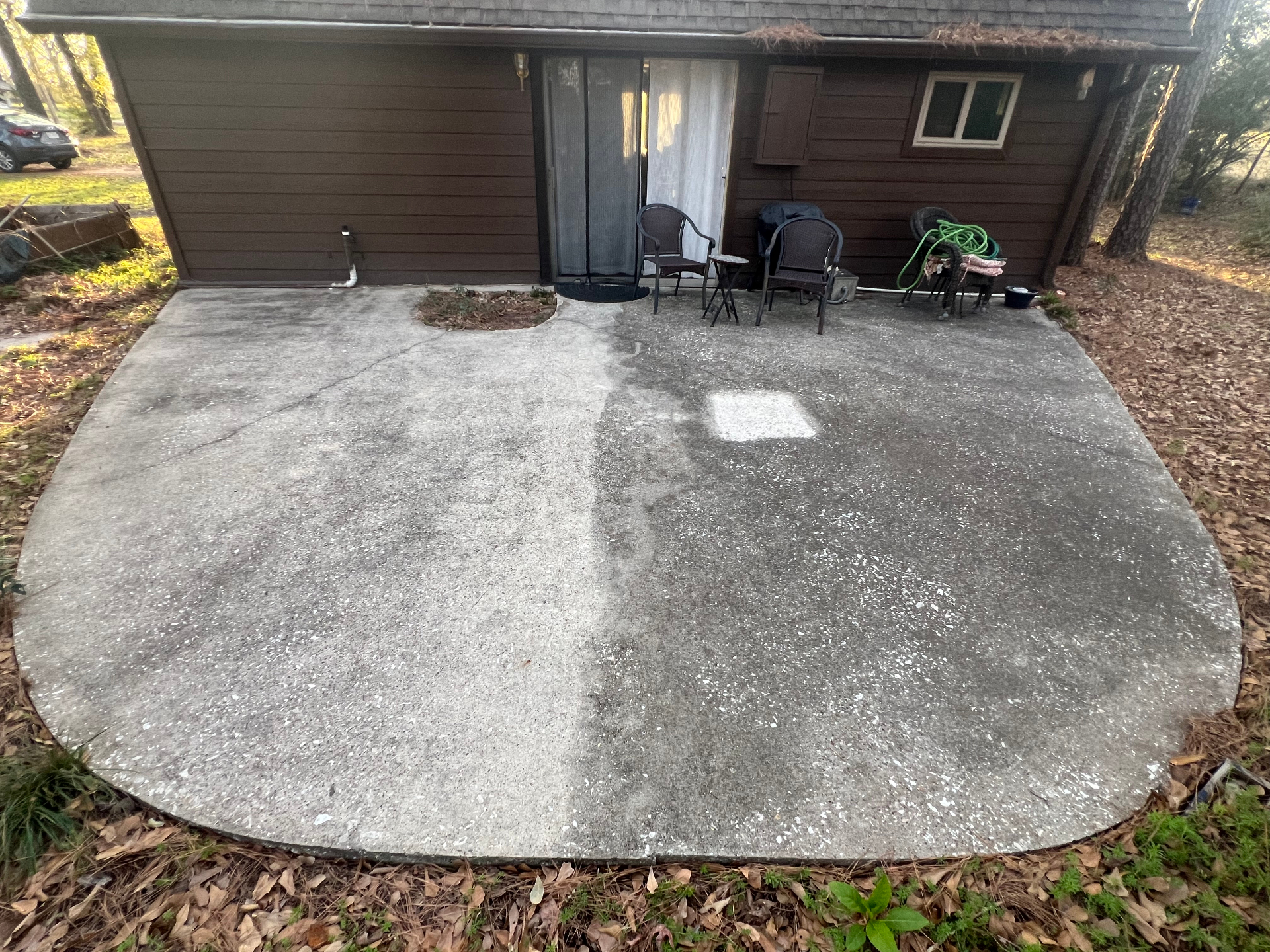
- 15 Feb 2026+30 months
Two and a half years
Visual contrast remains clear. Sealed half has aged but has not failed.
- 1 Mar 2026+31 months
Early spring after third winter
Protective performance held through three full freeze/thaw seasons without recoating.
- Apr 2026+33 months · macro
The double-coat patch tells the real story
Macro shot of the test surface. The bright square on the right is the original double-coated test patch — still holding its near-original concrete tone while surrounding unsealed and single-coated areas have weathered. Clearest visual proof that double-coating dramatically extends real-world performance.
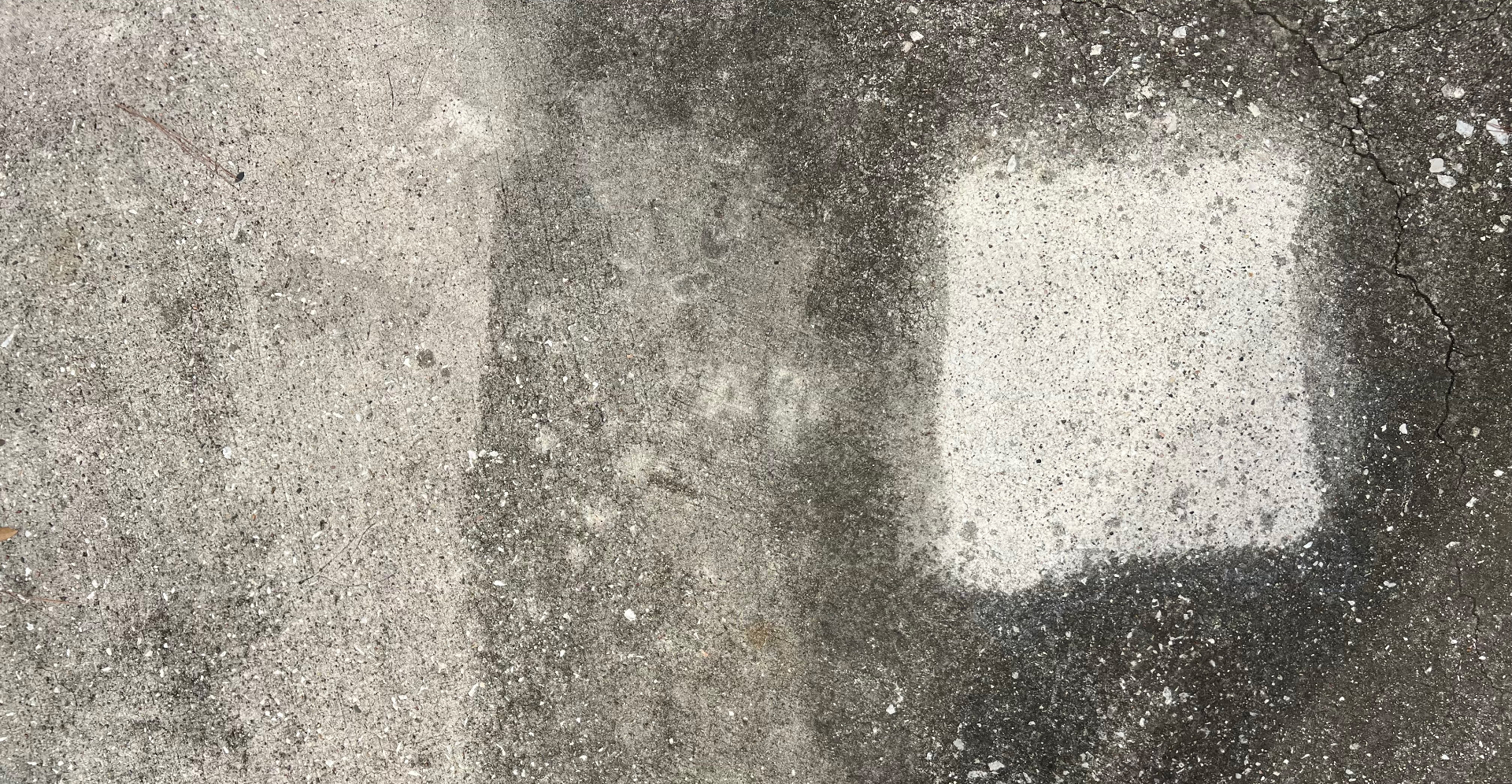
Application note from the test: The 33-month macro photograph is the single most important image in this review. The bright square on the right is the original double-coated reference patch — still holding its near-original concrete tone while surrounding single-coated and unsealed areas have visibly weathered. For outdoor concrete that will see freeze/thaw cycling, biological pressure, and years of traffic, double-coating is clearly worth the extra material. This is not marketing — it is documented on the same surface, 33 months apart.
Technology — silane/siloxane hybrid with nano-additives
Nanoprotect uses a silane/siloxane hybrid chemistry enhanced with nano-additives. Silanes penetrate deep into the concrete pore network and chemically bond to the substrate. Siloxanes anchor closer to the surface to provide immediate hydrophobic performance. The nano-additive component enhances penetration depth and bonding density at a molecular level compared to standard silane/siloxane formulations.
The result is a non-film-forming penetrating sealer that does not sit on top of the surface but becomes part of the pore structure itself. This is why it is breathable, does not peel, does not create a slippery surface, and does not alter the visual appearance of the substrate.
Global Amazon review intelligence — 3,068 ratings, 576 detailed reviews
Secondary evidence track. The field test is primary. The Amazon review analysis provides corroborating context and honest transparency about documented limitations.
| Stars | Count | % | US reviews | German reviews |
|---|---|---|---|---|
| 5★ | ~419 | 69% | Yes | Yes |
| 4★ | ~96 | 19% | Yes | Yes |
| 3★ | ~22 | 7% | 0 | All |
| 2★ | ~20 | 2% | 0 | All |
| 1★ | ~19 | 3% | 2 (non-eligible substrate) | Rest |
| Total | ~576 detailed | |||
| Overall | 3,068 global ratings | 4.5/5 | Amazon's Choice | |
What the positive reviews tell us
US positive patterns
US positive reviews are consistent and specific. The dominant themes are immediate, dramatic water beading — described by one reviewer as water sitting "like mercury from a broken thermometer" — and ease of application with a standard pump sprayer. Vine reviewers confirm performance across balconies, patios, marble, limestone, travertine, quartzite, sandstone, and concrete. The product consistently delivers its core promise: protection without appearance change.
German positive patterns — multi-year repeat buyers
German 5★ reviews span multiple years and include a strong cohort of genuine repeat buyers — one of the clearest signals of long-term satisfaction in any review set. "Already purchased multiple times," "I've been using it for years," "always happy," "anytime again" appear repeatedly. Several German reviewers provide specific multi-year confirmation: one documents water still beading after one year on red paving stones with before/after photos; another confirms a terrace "kept clean until this year" with application dating to 2023; a buyer confirms "peace and quiet for several years" on a garden roof; another explicitly documents a brick wall still very water-repellent after 2 years.
The "time will tell" pattern
Some positive reviews include "let's see how long it lasts" qualifiers — honest and expected. The difference from the Foundation Armor SX5000 WB dataset is that the multi-year positive confirmations are far more frequent and specific in the Nanoprotect set — and they are reinforced by our own 34-month documented field evidence.
Honest limitations — what the critical reviews tell us
1. Coverage rate overstated for highly porous paving stones
The stated 40–60m² per 5L is not achievable on fresh, highly porous paving stones. Real-world coverage on those surfaces consistently runs 16–27m² per 5L across the critical review dataset — less than half the stated range in the worst cases. This is absorption physics, not product failure: a penetrating impregnator is simply consumed faster by more porous substrates. But the coverage claim needs to be communicated accurately. Buyers sealing new paving stones should budget 20–30m² per 5L and plan for a second coat.
2. Effect duration shorter on highly porous stone
Multiple timestamped German reviews document visible beading fading within 3–6 months on highly porous paving stones. The beading effect fading does not necessarily mean protection is gone — penetrating chemistry can persist after surface hydrophobicity diminishes. However, on very porous surfaces the overall depth of penetration may be shallower, resulting in genuinely shorter service life. Buyers on those surfaces should plan for more frequent reapplication than buyers on denser poured concrete.
3. Yellow spots on certain surfaces
One German 1★ reviewer documents yellow spots appearing after application on paving stones. This is not a universal outcome — the overwhelming majority of reviews report no color change — but it is documented and worth noting for buyers sealing light-colored or decorative stone.
4. Not suitable for non-porous substrates
The product cannot penetrate non-porous surfaces. It is not suitable for porcelain tiles, glazed ceramics, polished decorative stone, or indoor kitchen grout. These are not intended applications, but the product description should be clearer on this.
10-category scorecard
Evidence label: 34-Month Outdoor Field Test (primary) + Amazon Global Review Intelligence · 3,068 ratings · 576 detailed reviews · May 2026
Scores reflect 34 months of documented outdoor field evidence on poured concrete in a moderate European climate. Performance on highly porous paving stones may vary — see the coverage and durability notes in the limitations section above.
Strengths and trade-offs
Strengths
- · The only concrete sealer in this ranking with 34 months of documented, photographed, outdoor field evidence
- · Three complete freeze/thaw winters documented with no failure, no peeling, no whitening
- · Dramatic and sustained algae resistance confirmed in multi-year photographic record
- · 3,068 global ratings — Amazon's Choice — 88% positive (4★ + 5★)
- · Zero documented failures on intended outdoor concrete applications from US buyers
- · Strong multi-year repeat buyer loyalty across both US and German markets
- · Non-film-forming — breathable, non-slippery, no peeling risk
- · Natural matte finish on poured concrete — no appearance change
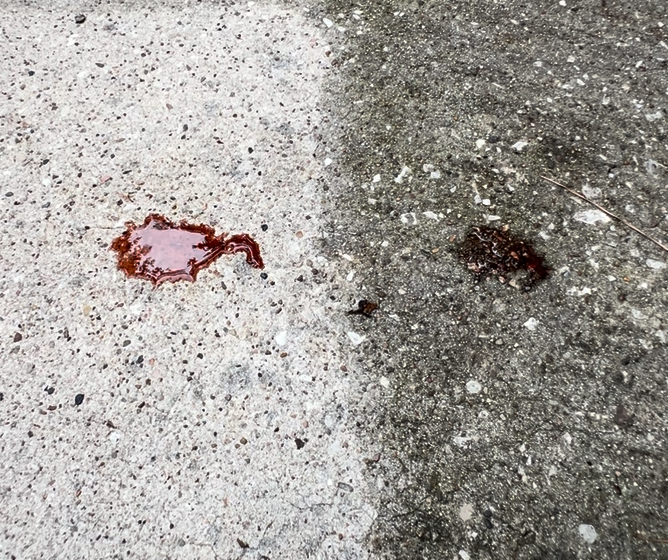
- · Red wine and beading tests confirm pore-level protection
- · Effective across concrete, brick, natural stone, pavers, and masonry
Trade-offs
- · Coverage rate significantly overstated for highly porous paving stones — real-world yield 16–27m² per 5L, not stated 40–60m²
- · Effect duration shorter on highly porous stone — reapplication needed more frequently than on denser concrete
- · Occasional yellow spots documented on certain porous stone surfaces
- · Not suitable for non-porous surfaces (porcelain, glazed tile, polished decorative stone, indoor grout)
- · Second coat required for full effect on highly absorbent surfaces
- · Natural matte finish only — not for buyers wanting wet-look or gloss enhancement
Substrate and application guidance
| Substrate | Expected performance | Coverage guidance |
|---|---|---|
| Poured concrete driveways and patios | Excellent — field test validated | Per manufacturer stated range |
| Concrete paving stones — moderate porosity | Good | Budget 30–40m² per 5L |
| New concrete paving stones — high porosity | Good but higher consumption | Budget 20–25m² per 5L; second coat recommended |
| Natural stone — brick, limestone, sandstone | Good | Varies by porosity — test patch recommended |
| Dense or polished stone, porcelain | Not suitable | — |
| Indoor kitchen grout | Not suitable — use dedicated grout sealer | — |
How it compares with Foundation Armor SX5000 WB
The most direct competitor in this ranking is Foundation Armor SX5000 WB — the same silane/siloxane chemistry category, similar price point, and the same natural matte finish positioning. The differences documented across both review datasets:
Long-term proof: Nanoprotect has 34 months of photographed, controlled, outdoor field evidence. SX5000 WB has 2,660 consumer ratings and 207 detailed reviews — none of which include a documented, photographed multi-year outdoor test with a side-by-side unsealed control.
US failure record: SX5000 WB has extensively documented failures on intended US surfaces — blotching, darkening, durability shortfalls in cold climates, and a slippery outcome on smooth substrates. Nanoprotect has zero documented US failures on intended outdoor concrete applications.
Instruction clarity: SX5000 WB has a documented systemic problem with wet-on-wet timing instructions that has caused failures across both Amazon and Home Depot. No equivalent instruction ambiguity appears in the Nanoprotect review set.
Coverage honesty: Both products have documented coverage shortfalls on porous surfaces. Nanoprotect's coverage issue appears primarily on highly absorbent paving stones — a substrate-specific physics problem. SX5000 WB's coverage issue appears more broadly across surface types.
The scoring gap — 9.3 vs 6.4 — reflects primarily the evidence gap: 34 months of documented proof versus a consumer review record with significant failure documentation. If SX5000 WB produced a 34-month outdoor field test with equivalent results, the gap would be smaller.
Read the Foundation Armor SX5000 WB full review or see the full side-by-side comparison table.
Frequently asked questions
›How long does Nanoprotect Concrete Sealer last?
Our documented outdoor field test shows continued protection at 34 months on poured concrete without recoating, through three full freeze/thaw winters. German reviews on highly porous paving stones suggest shorter effective periods — often 1–2 seasons before reapplication is beneficial on high-porosity surfaces. The substrate matters significantly. On poured concrete, our field evidence supports multi-year performance without recoating.
›Does Nanoprotect change the appearance of concrete?
No. It is a penetrating impregnator, not a film former. The surface retains its natural matte appearance. No gloss, no color enhancement, no wet-look effect. Buyers wanting visual enhancement need a different product category — see our comparison page for alternatives.
›Single coat or double coat?
The 33-month macro photograph in our field test is definitive: the double-coated reference patch is clearly holding its near-original concrete tone while surrounding single-coated and unsealed areas have visibly weathered. For maximum long-term performance on outdoor concrete, double-coating is strongly recommended. On highly porous paving stones, double-coating (or three coats) is essential to achieve proper saturation.
›Why is my coverage lower than stated?
Coverage depends heavily on substrate porosity. The stated 40–60m² per 5L is achievable on moderate-porosity surfaces. On fresh or highly porous paving stones, expect 20–30m² per 5L in practice. This is absorption physics — a penetrating impregnator is consumed faster by more porous substrates. Apply until saturation, wait, and apply again.
›Will it stop algae and biological growth?
Our 12-month and 29-month field test photographs document dramatic algae resistance on the sealed side versus visible green staining on the unsealed control half. The mechanism is indirect — by keeping water and nutrients out of pores, the product significantly slows biological colonisation. Some German reviewers on highly porous stone report algae returning after one winter — consistent with the shorter effective period documented on those surfaces.
›Is it safe to apply yourself?
Yes. Standard pump sprayer on cleaned, dried surfaces. The most common cause of under-performance is under-application — going too light to save product. Apply until the surface is visibly wet, roll out any puddles, and apply a second coat once the first is absorbed.
›Is it suitable for all stone types?
Not all. Designed for porous, absorbent substrates — concrete, brick, natural stone, paving stones. Not suitable for non-porous surfaces such as porcelain tiles, glazed ceramics, polished decorative stone, or indoor kitchen grout.
›How does it compare to Foundation Armor SX5000 WB?
Both are penetrating silane/siloxane sealers at a similar price point. The key difference is documented evidence: Nanoprotect has 34 months of photographed outdoor field evidence on a controlled split surface. SX5000 WB has no equivalent long-term documentation, and its US review record includes significant failure patterns on intended surfaces — blotching, darkening, and cold-climate durability shortfalls. See the full Foundation Armor SX5000 WB review for the complete analysis.
›Why do all the negative reviews come from Germany?
German buyers predominantly apply the product to highly porous concrete paving stones (Betonpflaster), which absorb impregnating liquid far faster than poured concrete. This explains both the coverage shortfalls and the shorter beading duration documented in German critical reviews. US buyers predominantly apply to poured concrete driveways and patios — the substrate for which our field test provides 34 months of positive documented evidence. The geographic split reflects substrate differences, not a product quality difference between markets.
Final verdict
Nanoprotect ranks #1 in our 2026 ranking for one reason above all others: it is the only product for which we have continuously documented, photographed, outdoor performance evidence across 34 months on a real patio, through three full winters, against an unsealed control. That evidence does not exist for any other product in this ranking — or, to our knowledge, for any other concrete sealer sold in the US market.
The global review record reinforces the field test evidence. 3,068 ratings, 4.5/5 global average, Amazon's Choice. 88% positive (4★ and 5★). Zero documented failures on intended outdoor concrete applications from US buyers. Multi-year repeat purchase loyalty confirmed in both the US and German markets.
The honest limitations are real and should be stated plainly: the coverage claim is overstated for highly porous paving stones, buyers on those surfaces should plan for higher consumption and potentially shorter reapplication intervals, and the product is not suitable for non-porous substrates.
But within its intended application — porous outdoor concrete, paving, and natural stone — Nanoprotect delivers what the industry almost never delivers: proof.
Related reading: 2026 concrete sealer ranking, review intelligence methodology, how long concrete sealer actually lasts, why most concrete sealers fail, best concrete sealer for freeze/thaw climates.
Evidence source: 34-month outdoor field test (ongoing, started 25 July 2023) on split-surface poured concrete patio, supplemented by structured analysis of 576 detailed Amazon reviews across all star levels from the US and Germany, cross-referenced against a total global rating pool of 3,068 ratings. Field test scores are primary. Amazon review intelligence is secondary context. Methodology: ConcreteSealer.blog Review Intelligence Protocol. See full methodology at concretesealer.blog/methodology.